To all the in-game characters
Game Design, Recursive Narrative
About
To all the in-game character is an immersive narrative exploring modern game engines' potential as story devices for meta/recursive narratives. Working with OpenAI’s large natural language processing model GPT3 to present a tribute to all the in-game characters.
Background
The concept was set out to explore the following two domains:
- Collaboration with machine learning to generate story materials.
- Pushing modern game engines’ ability to tell a story about a self-aware in-game character.
Before coming up with a script for the narrative, the progress started out with the creation of space and using the space as creative prompts for the story and characters. ON COLLABORATING WITH GPT-3 The process started out with the goal to fabricate space from texts gathered from my interaction with a trained(fine-tuned) GPT-3.
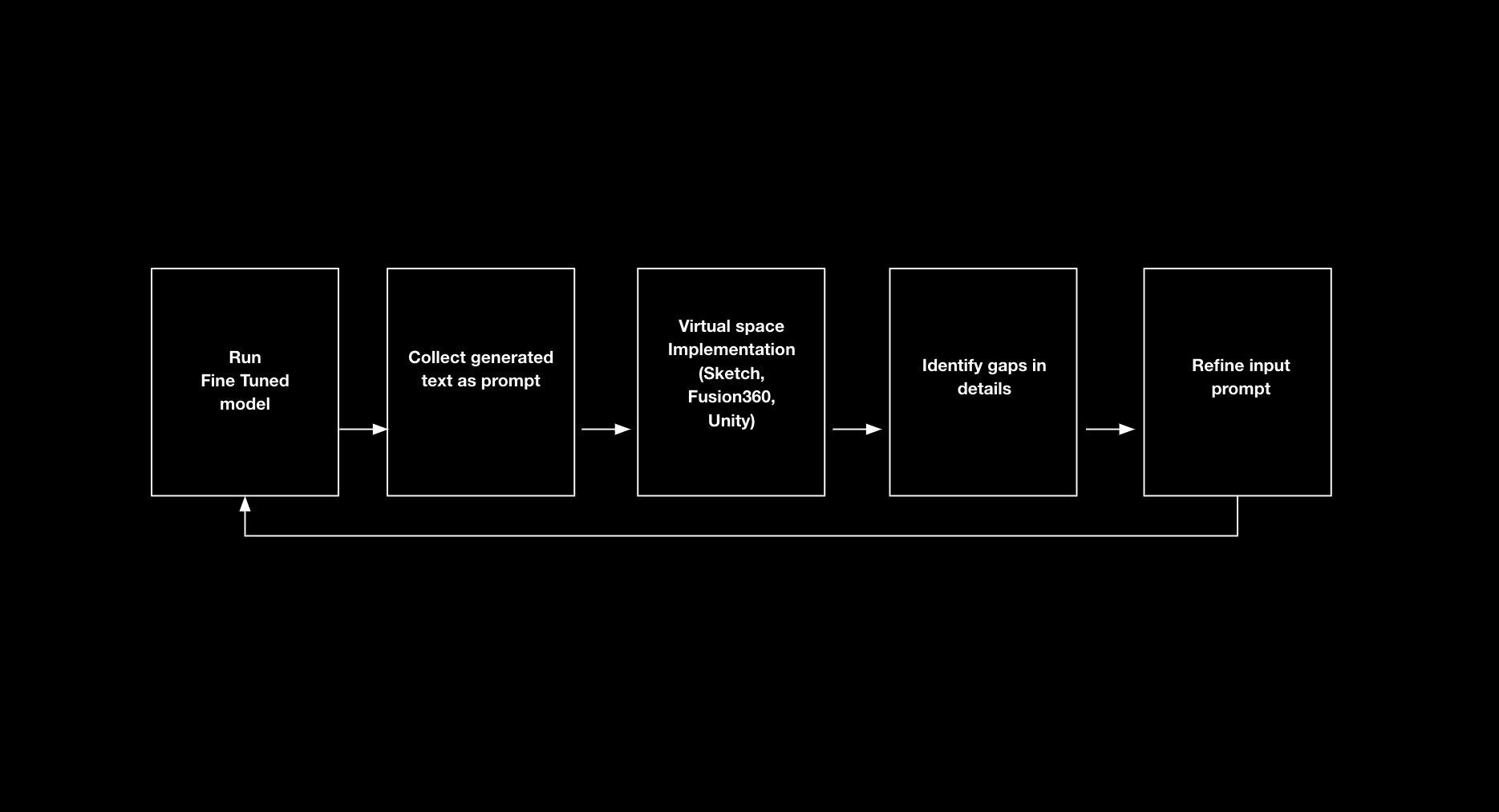
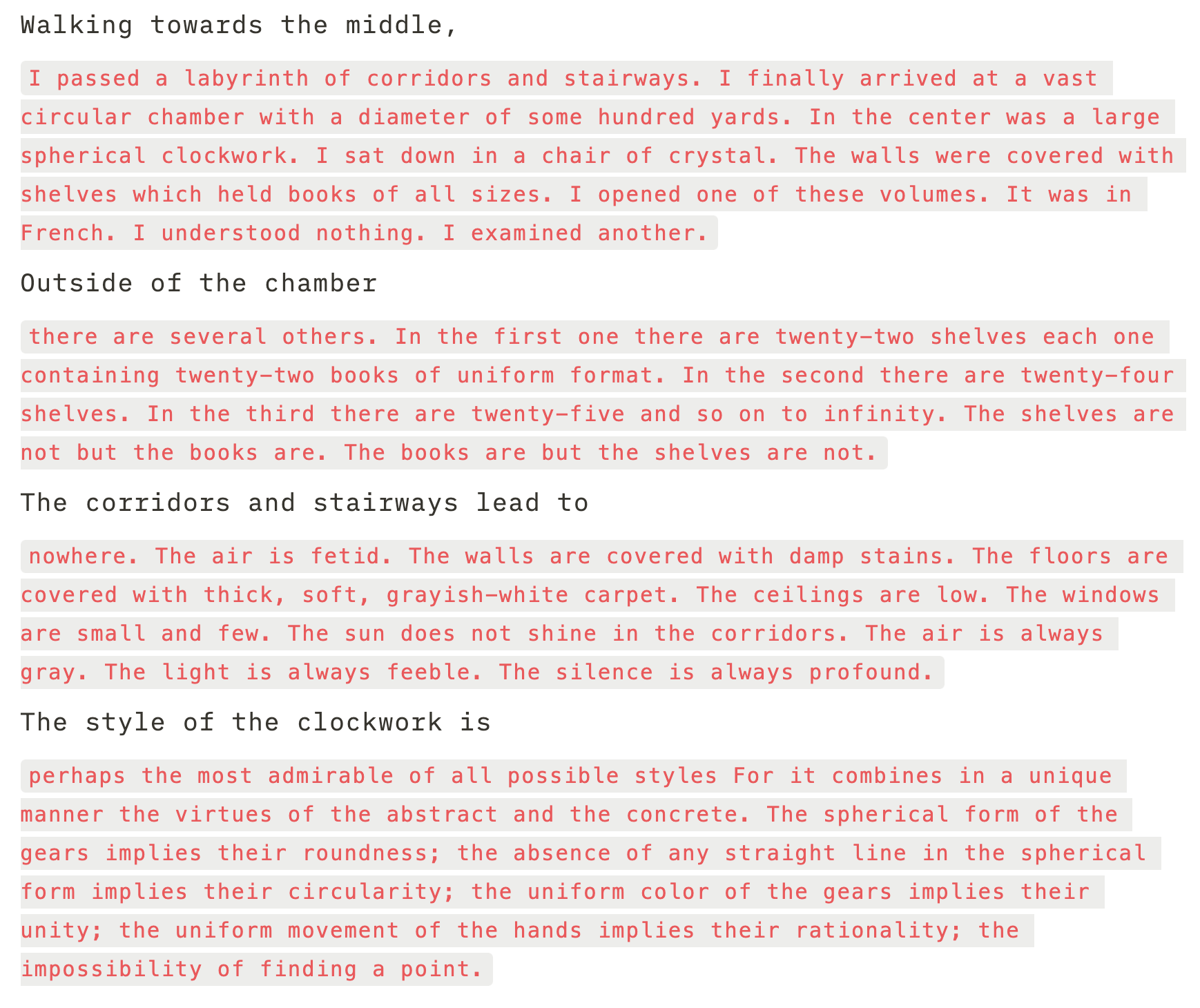
The model in the diagram was trained with two books from Jorge Luis Borges (Library of babel and The garden of the forking paths). With the looping progress of recursively going into more detailed descriptions on each iteration.
Below is a example of my prompts and the results from the model ↘︎
Narrative
Inspired by Borges’ work and the generated texts, the narrative revolves around an in-game character player controls, who, through discourses with an entity called “Scene Manager” and interactions with the physical clues in the space, gradually realized that they’re in a game.
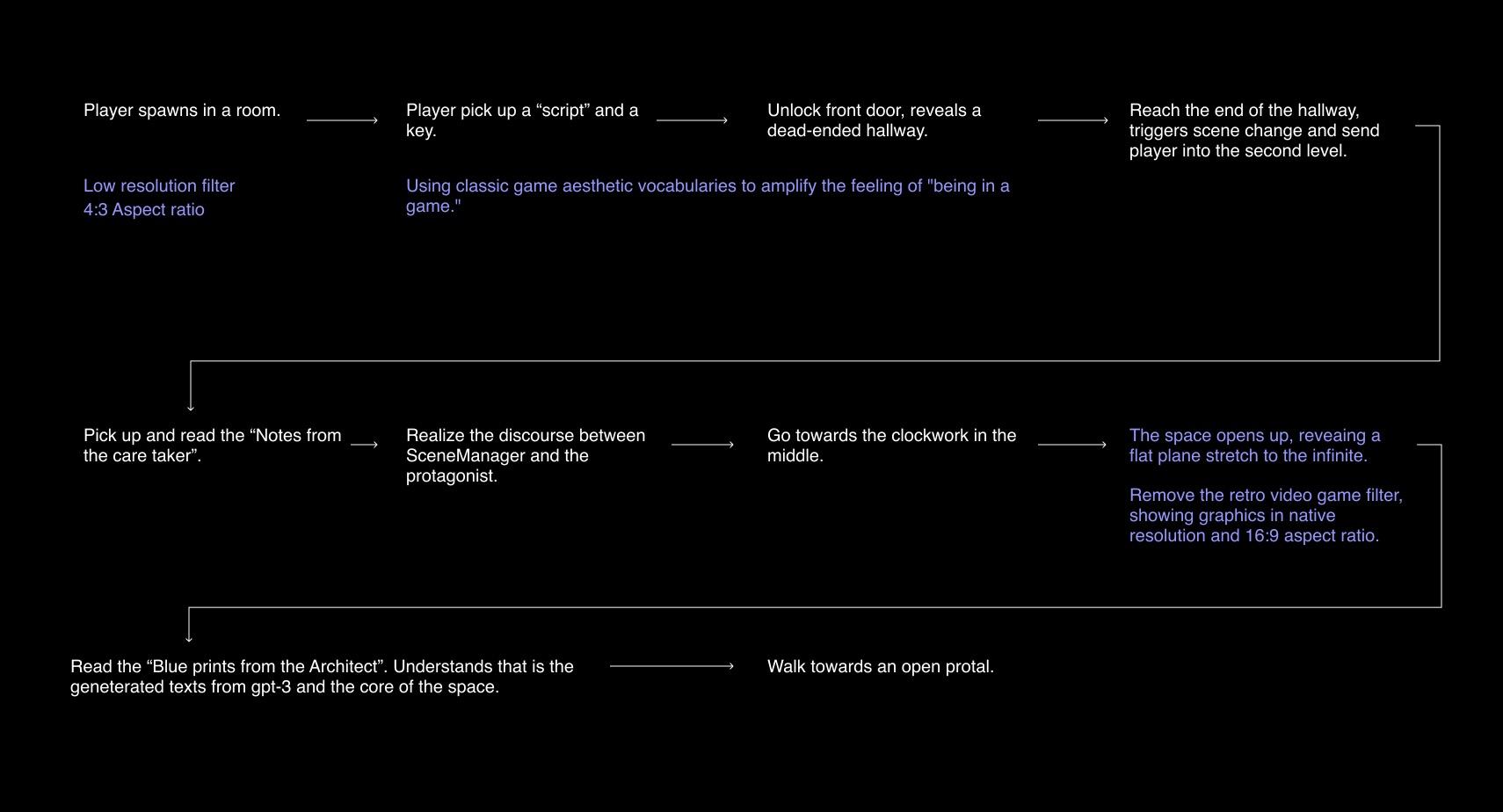
To tell a story about a gradually self-aware in-game protagonist, the narrative set out to provide a one-way dialog between the game and the silent protagonist.
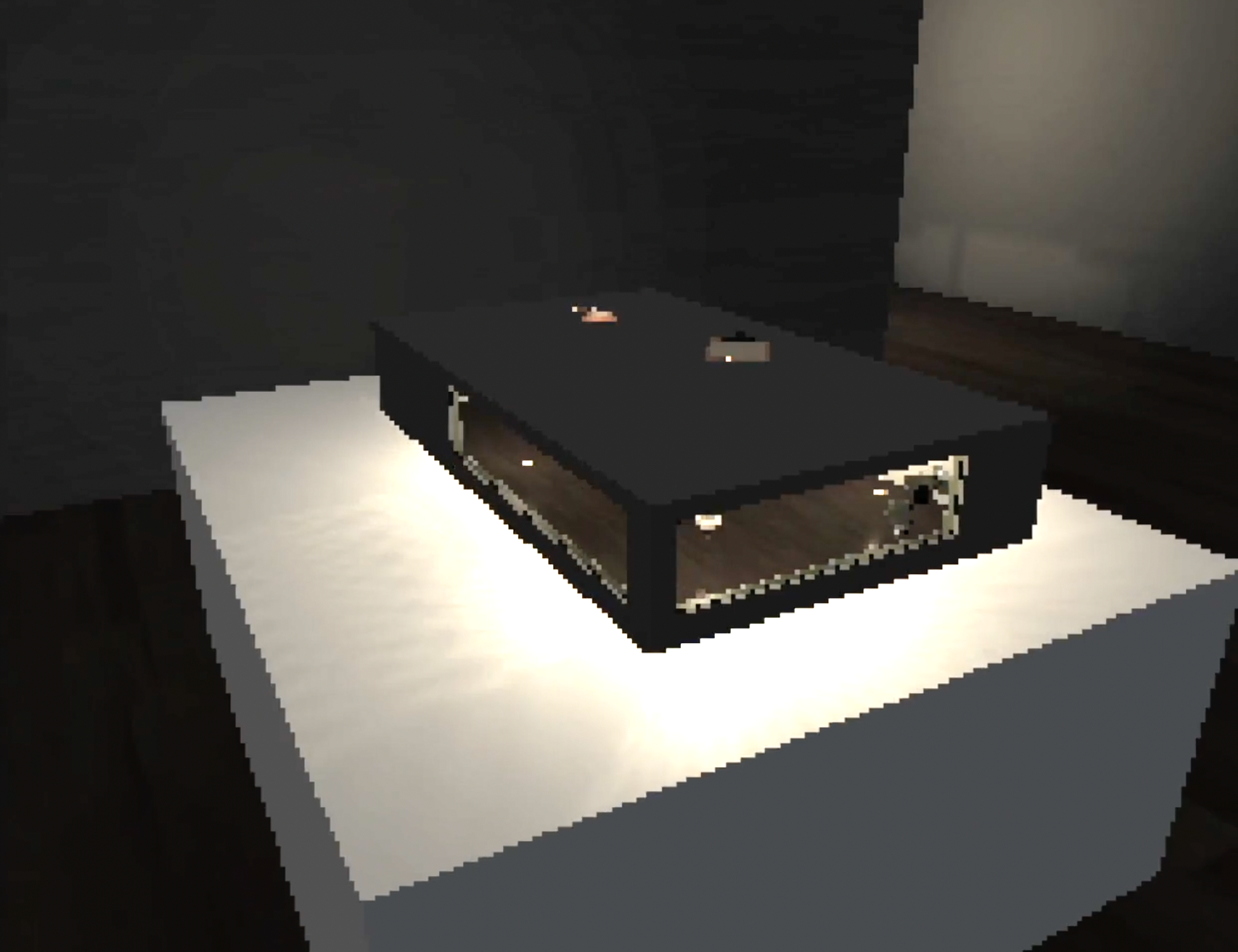
Player goes into the back of the room, where they see a scaled model of this level, hinting at a recursive narrative and telling our "protagonist" something's off.
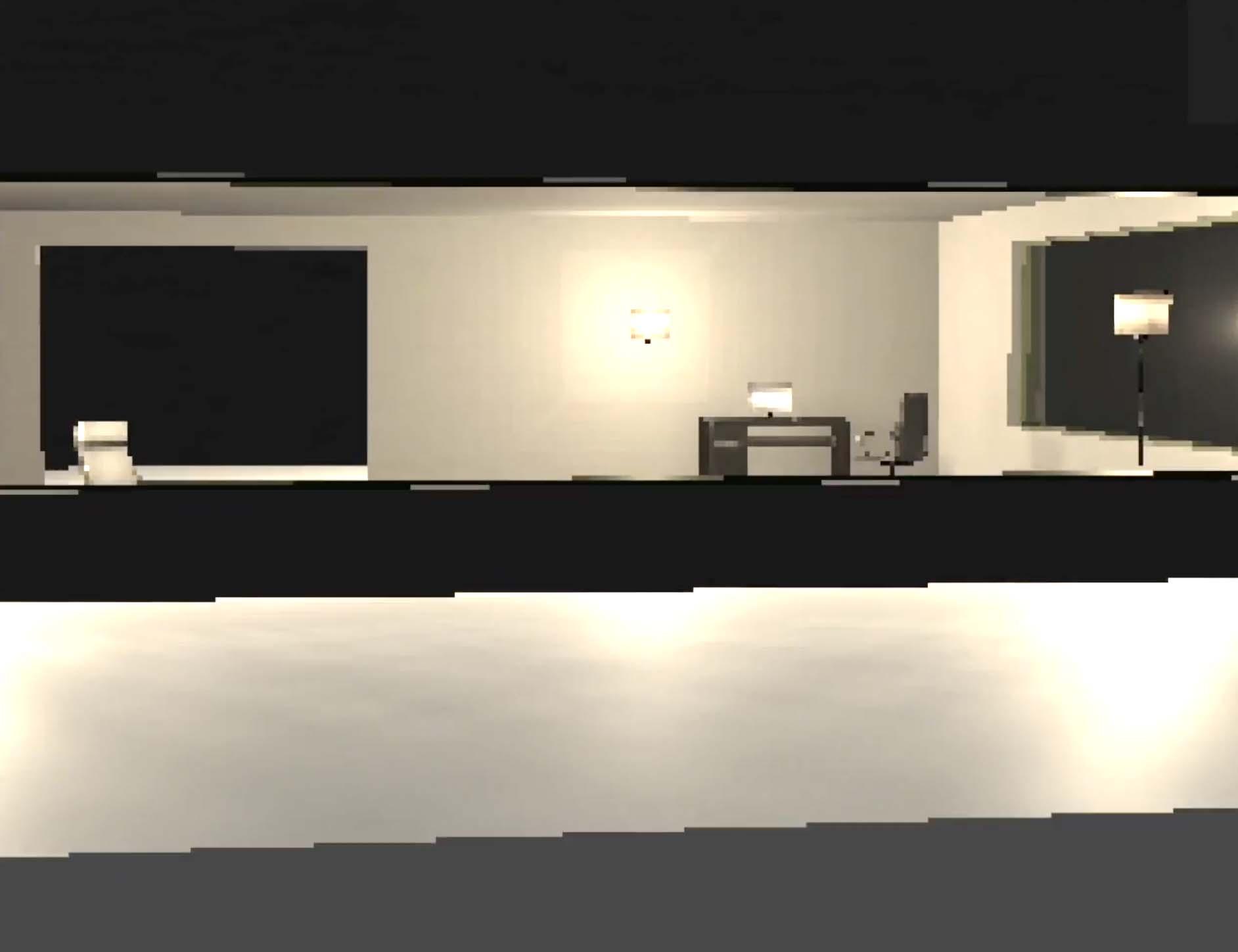
In the second level, a new character called "Scene Manager" is introduced, speaking on behalf of the game itself. The name "Scene Manager" is a direct reference to a common Unity game development practice, where developers often create and name a meta-object (usually not seen in-game) "Scene Manager" to control the events in-game. In the context of the narrative and to the protagonist, this is the first direct breach of the fourth wall. As the scene manager reveals more meta-information, the player starts to separate themselves from the protagonist, ascribing a more integrated identity to the in-game protagonist.
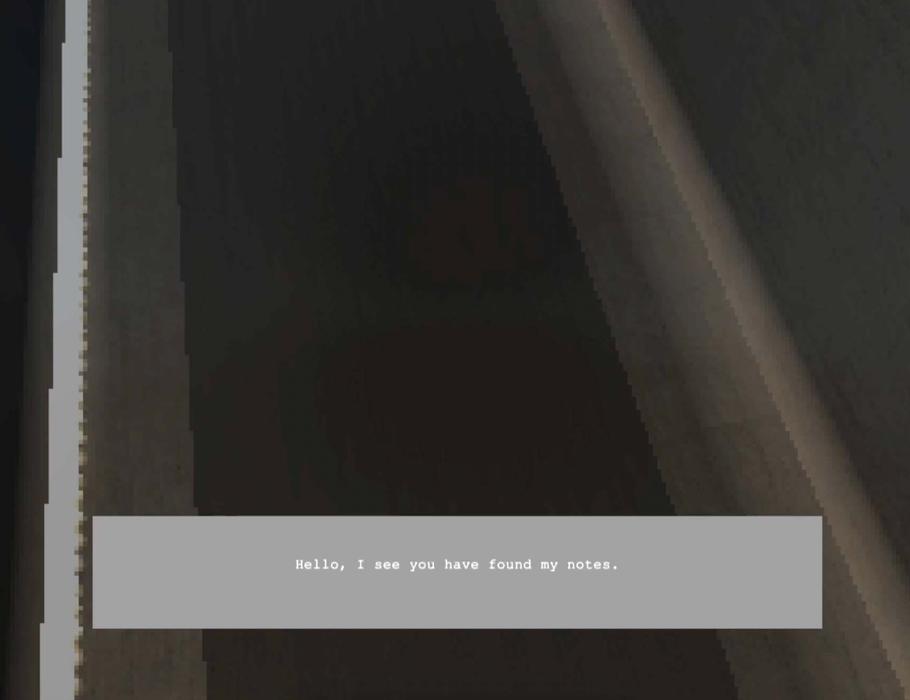

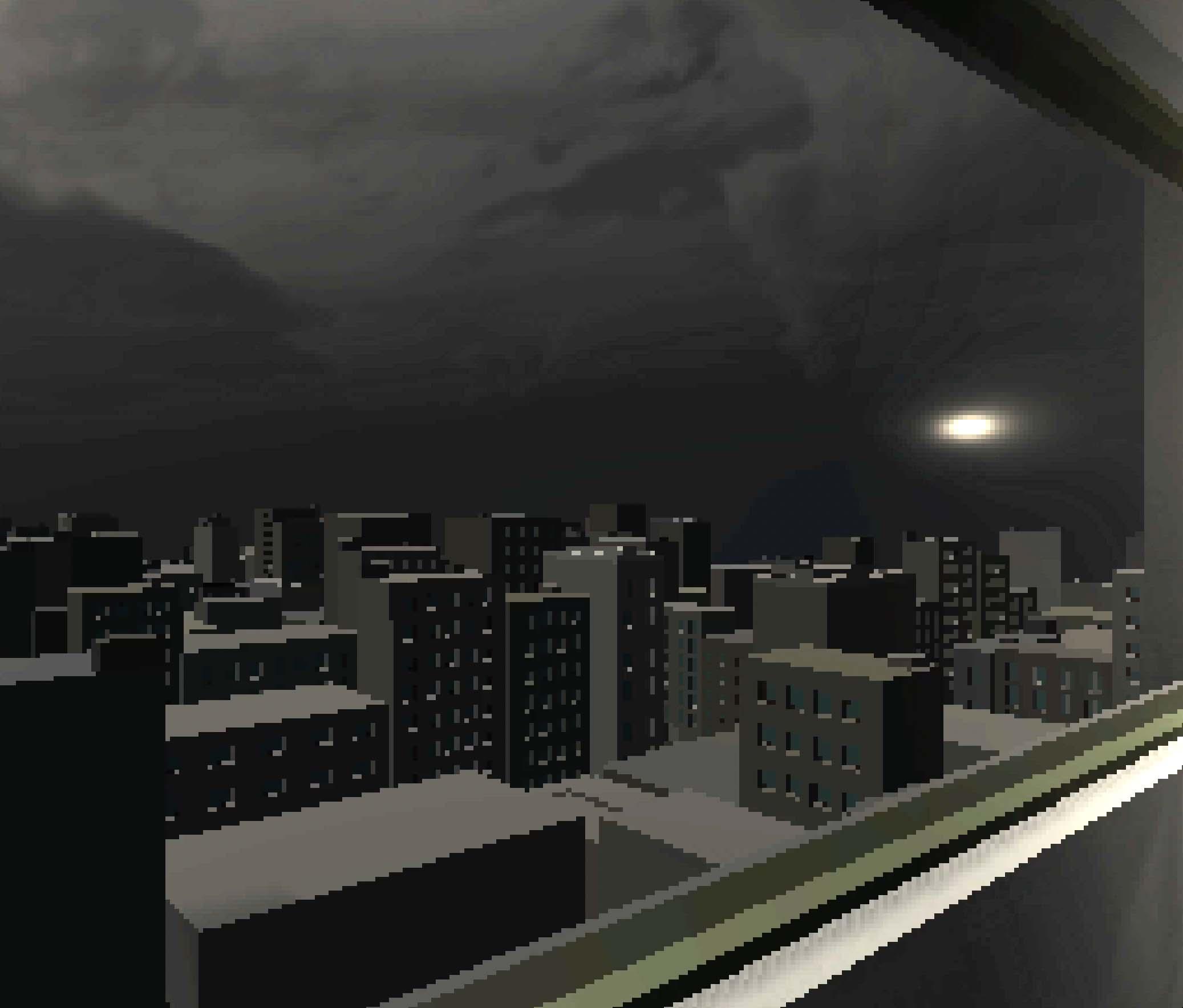
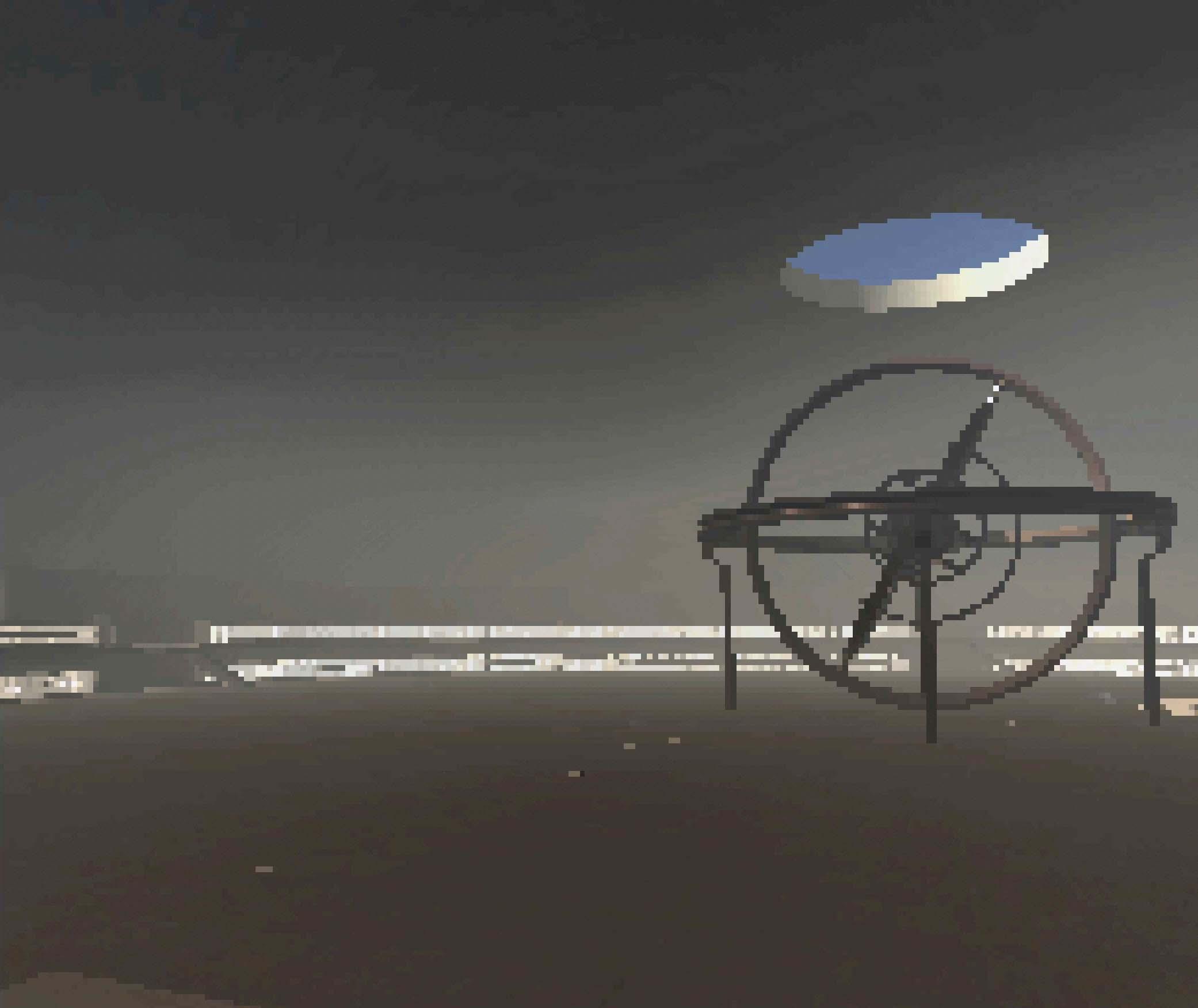
Game Stills

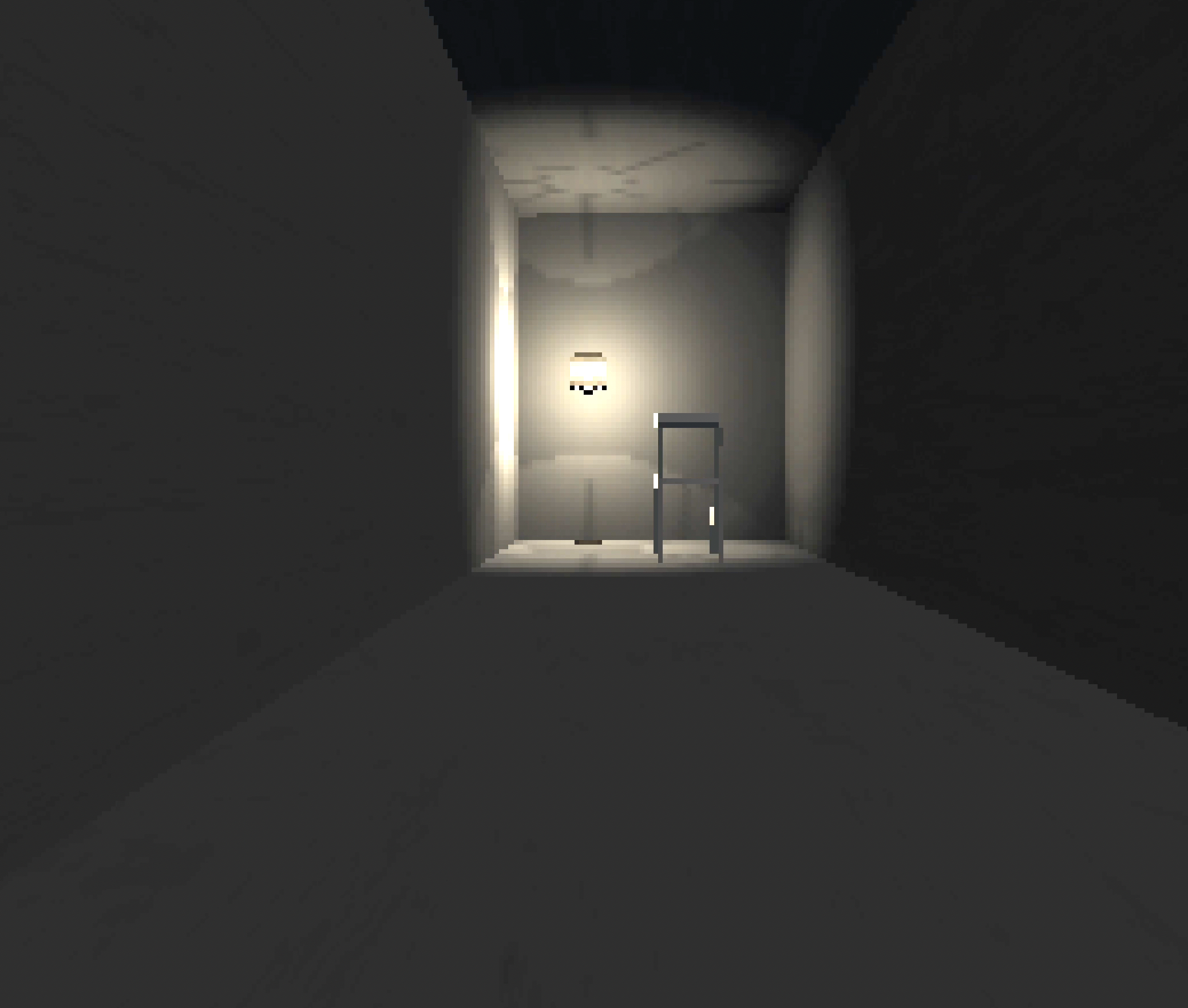
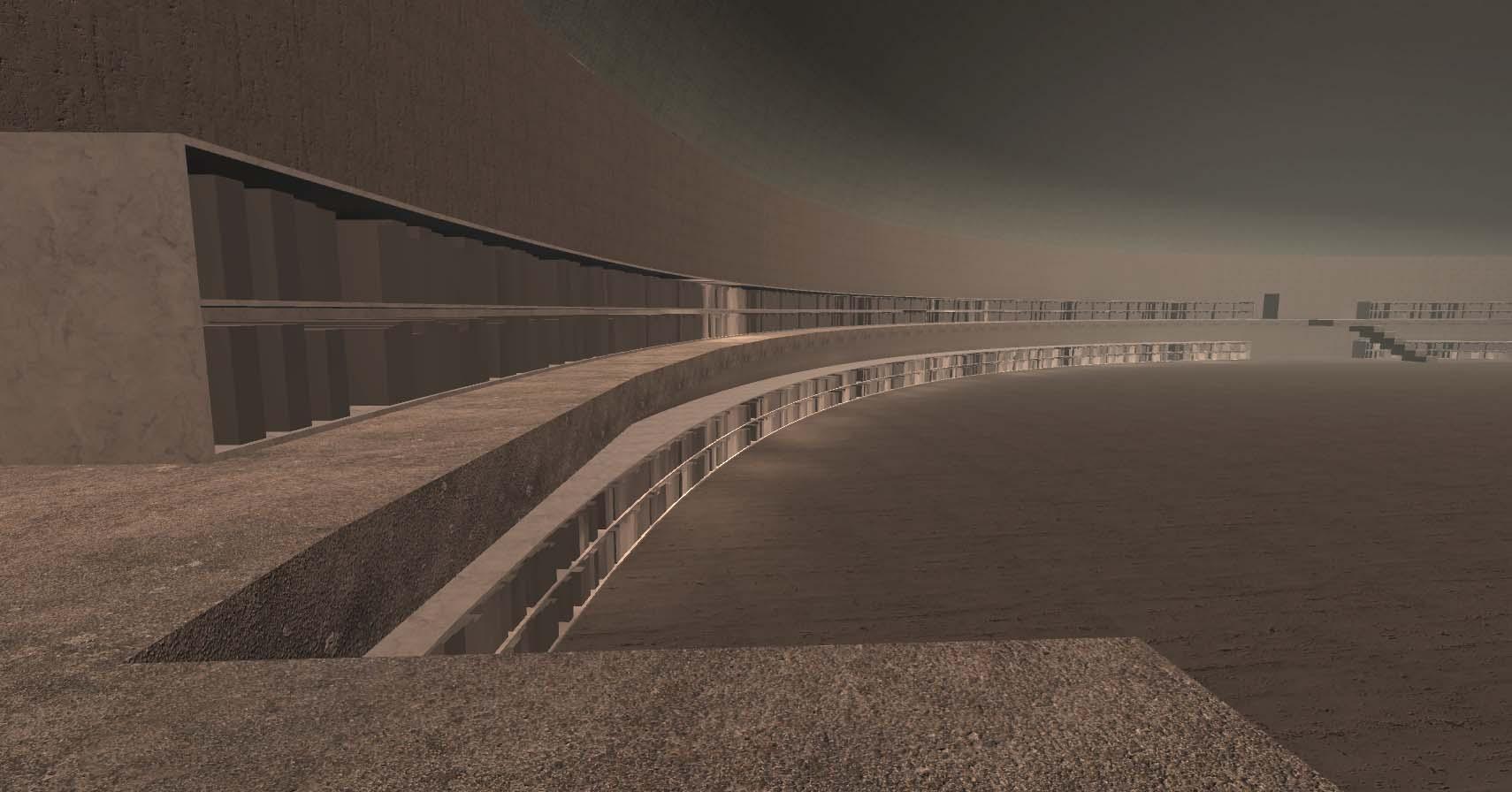
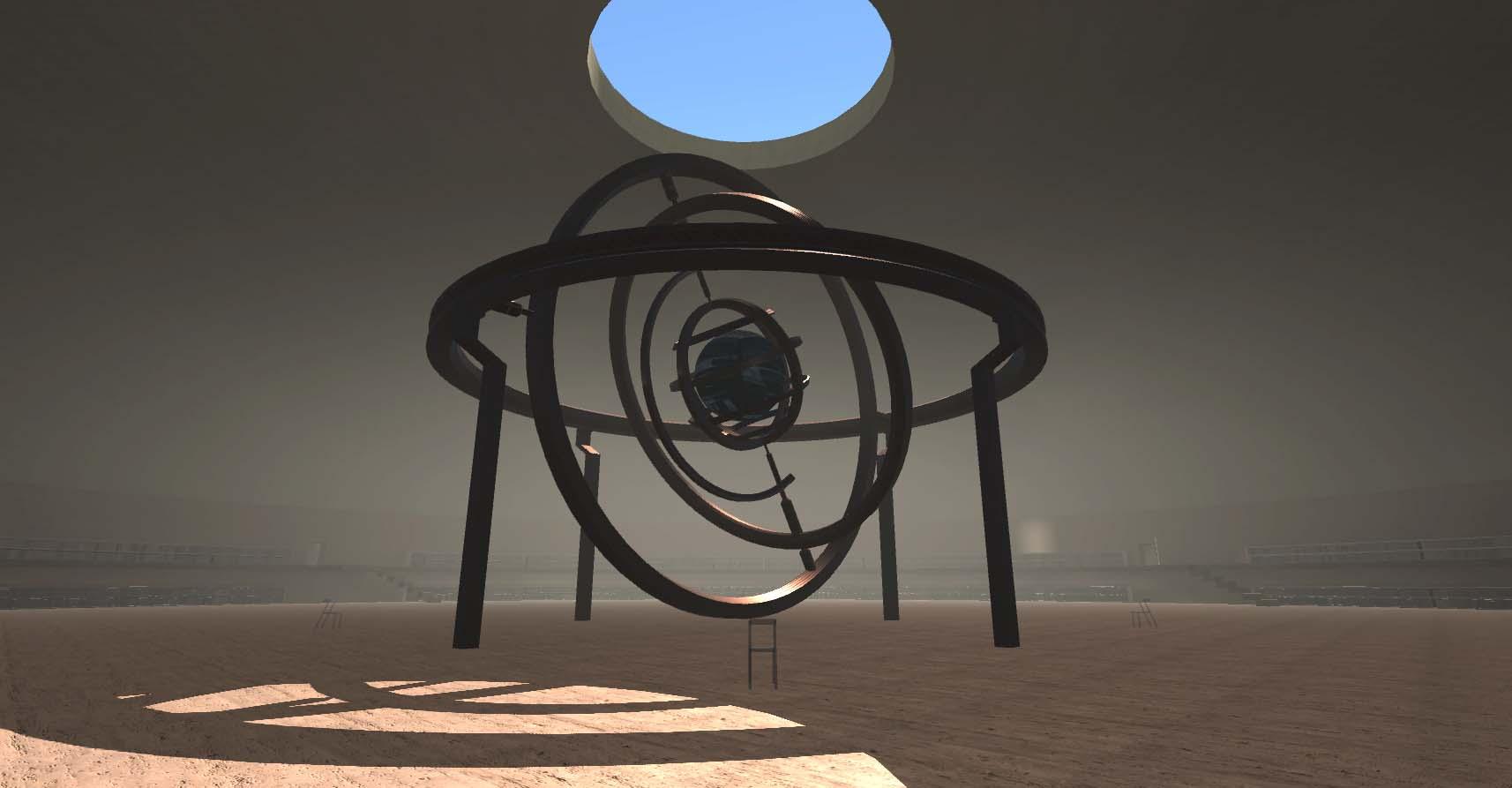

Creative Coding: Unity | Parsons, TNS
Instructors
John Pierre